Are parabens and phthalates in anti-acne products harmful?

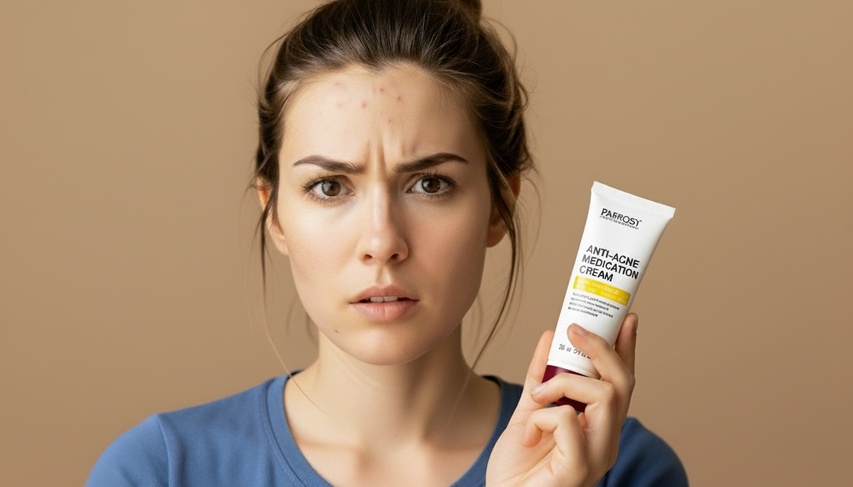
Parabens and phthalates are widely used preservatives and stabilizers in personal-care products, but research suggests they may act as endocrine disruptors. While human evidence is limited, animal studies raise concerns about hormonal, reproductive, and developmental effects. Many dermatology-focused brands now formulate without these ingredients. Choosing “paraben-free” and “phthalate-free” anti-acne products can reduce potential long-term exposure.
Key Takeaways
- Parabens and phthalates are commonly found in skincare and cosmetic products, including some acne treatments.
- Research suggests these chemicals may influence hormone signaling pathways, although human data is still evolving.
- Product labels can be misleading; some items marketed as “natural” or “green” still contain undeclared parabens.
- Choosing products labeled “paraben-free” and “phthalate-free” and simplifying your skincare routine can significantly reduce exposure.
Parabens and Phthalates in Anti-Acne Products
What are parabens and phthalates in simple terms?
Parabens and phthalates are synthetic chemicals widely used across cosmetic, skincare, household, and industrial products. Parabens function primarily as preservatives, protecting formulas from microbial growth that could otherwise compromise texture, stability, or safety. Phthalates, by contrast, act mainly as solvents and plasticizers. In personal care products, they help ensure smooth application, prevent cracking in formulations, and stabilize fragrance.
These two ingredient families are found in a vast range of everyday items, including lotions, cleansers, fragrances, shampoos, gels, and some over-the-counter acne treatments. Their prevalence makes understanding their purpose and potential health implications especially important for people with acne-prone skin who often use multiple products daily.
Why are parabens used in acne-related skincare products?
Acne-focused formulations, particularly leave-on treatments such as lotions, serums, or gels, require preservatives to prevent bacterial and fungal contamination. Without antimicrobial protection, water-based products can degrade rapidly, potentially leading to skin irritation or infection. Parabens have historically been favored because they are inexpensive, highly effective in small concentrations, and stable across a broad pH range.
In acne care, parabens may be found in:
- Cleansers
- Moisturizers for oily or acne-prone skin
- Makeup used to conceal acne
- Topical treatments containing salicylic acid, benzoyl peroxide, or sulfur
Though they enhance product longevity, their potential interaction with endocrine pathways is a major factor driving consumer interest in alternative preservatives.
Why are phthalates added to personal-care products?
Phthalates play a different functional role compared to parabens. In acne-related products, they may be present in formulas containing fragrance components or ingredients that require solubilization. Their roles include:
- Helping fragrances last longer on the skin
- Improving product spreadability
- Reducing brittleness in packaging
- Ensuring uniform consistency in gel or serum products
The most concerning phthalate in personal care products has historically been diethyl phthalate (DEP), often used in fragrance blends. Because “fragrance” is considered proprietary, companies are not required to disclose the chemicals contained within a fragrance mixture, making it difficult for consumers to identify potential phthalate exposure.
Why are parabens and phthalates considered possible health concerns?
The concern surrounding these chemicals centers on their potential to mimic or interfere with hormone activity. Both parabens and phthalates have been classified as endocrine-disrupting chemicals (EDCs)—substances that can interfere with the functioning of estrogen, testosterone, or thyroid hormone pathways.
Laboratory and animal studies show that:
- Parabens can weakly mimic estrogen, leading to concerns about breast tissue development and reproductive health.
- Phthalates may reduce androgen signaling and affect reproductive organ development in male animals.
- Both chemical groups have been linked to impacts on fertility, metabolic regulation, and early puberty in animal models.
However, translating these findings directly to humans is extremely difficult. Exposure levels, absorption pathways, metabolism, and long-term dose patterns differ significantly. Nevertheless, the scientific and regulatory communities increasingly acknowledge that caution is reasonable—especially with chronic, lifelong exposure to multiple products per day.
What does current human research suggest about these ingredients?
Human studies are observational rather than experimental, meaning researchers measure chemical levels in urine or blood and look for trends in health outcomes. Findings include associations (not proven causation) between elevated paraben or phthalate levels and:
- Early puberty in girls
- Reduced sperm quality
- Pregnancy complications
- Hormonal fluctuations
- Increased oxidative stress
- Certain cancers
Importantly, correlation does not equal causation. Many confounding factors—such as diet, environment, and genetics—also influence these outcomes. Still, the consistent appearance of similar trends in many studies has encouraged consumers and dermatologists to favor safer alternatives whenever possible.
How much exposure do people actually get from skincare?
Several studies have demonstrated that people who use more personal-care products have higher measurable levels of parabens and phthalates in their urine. Daily routines involving multiple layered products—such as cleanser, serum, spot treatment, moisturizer, sunscreen, makeup, and fragrance—can significantly compound exposure.
Products that contribute most heavily include:
- Lotions applied to large body areas
- Deodorants and antiperspirants
- Hair styling products
- Perfumes
- Moisturizers
- Makeup with long-wear claims
Even individuals focused mainly on acne care can accumulate considerable exposure through cleansers, serums, moisturizers, and cosmetic products used to cover blemishes.
Can “natural” or “clean” skincare labels be misleading?
Yes. Labeling regulations in the U.S. allow brands to use marketing terms like “green,” “natural,” or “clean” without meeting standardized ingredient criteria. A notable analysis of over two hundred consumer products found parabens present in several items that did not list them on the ingredient label. Possible reasons include:
- Contamination from raw materials
- Use of pre-preserved botanical extracts
- Incomplete labeling of fragrance components
- Supply chain inconsistencies
For consumers, this means that ingredient transparency varies widely. The most reliable approach is choosing brands that explicitly state “paraben-free” and “phthalate-free.”
Are parabens and phthalates banned in any countries?
Regulation differs widely across global markets.
- The European Union restricts or bans several parabens and multiple classes of phthalates in cosmetics.
- Canada monitors these chemicals closely and restricts certain forms.
- The United States currently permits both parabens and phthalates in personal care products. The FDA cites insufficient evidence of harm at typical exposure levels; however, ongoing research continues to inform regulatory discussions.
International policies reflect varying interpretations of the balance between precaution and confirmed harm. Many brands adopt EU-style standards voluntarily to meet global consumer expectations.
How can someone reduce their exposure to parabens and phthalates?
Reducing exposure does not require completely eliminating skincare products. Small, intentional changes can significantly decrease overall absorption. Useful strategies include:
- Simplifying your skincare routine to fewer essential products
- Avoiding products with vague “fragrance” ingredients
- Choosing fragrance-free or naturally scented alternatives
- Selecting clearly labeled “paraben-free” and “phthalate-free” products
- Opting for brands committed to transparent ingredient disclosure
For acne-prone skin, minimalism can also reduce irritation and decrease the risk of pore-clogging or sensitivity reactions.
What should you look for on ingredient labels?
Consumers can scan product labels for common parabens and phthalates. Parabens typically end with “-paraben,” including:
- Methylparaben
- Propylparaben
- Ethylparaben
- Butylparaben
Phthalates may be listed as:
- Diethyl phthalate (DEP)
- Dibutyl phthalate (DBP)
- Dimethyl phthalate (DMP)
More often, however, phthalates hide within fragrance mixtures. Choosing fragrance-free formulations is one of the simplest ways to avoid them.
What are safer alternatives increasingly used in acne products?
Many modern acne-focused formulas are turning to alternative preservation systems, such as:
- Sodium benzoate
- Potassium sorbate
- Ethylhexylglycerin
- Phenethyl alcohol
- Caprylyl glycol
These alternatives are widely considered safer from a hormonal perspective and are suitable for sensitive and acne-prone skin.
How do parabens and phthalates influence acne specifically?
While these chemicals are not known to directly worsen acne, their potential hormonal effects raise theoretical concerns. Hormonal fluctuations—especially increased androgens—can drive sebum production and acne severity. Although there is no evidence to prove that parabens or phthalates worsen acne, many individuals prefer to avoid ingredients that may interfere with hormone pathways.
Additionally, sensitive or acne-prone skin may react to heavily fragranced products, many of which contain phthalates. Fragrance allergens can cause irritation, redness, or disruption of the skin barrier, which may indirectly aggravate breakouts.
Which MDacne acne creams are formulated without parabens and phthalates?
Yes. Many of the most innovative acne-care brands have eliminated these ingredients entirely.
Effective acne-fighting formulations rely on well-studied actives such as:
- MDacne Benzoyl peroxide 2.5% cream
- MDacne Benzoyl peroxide 5% cream
- MDacne Salicylic acid 2% cream
- Retinol 2.5% + Niaciamide cream
- Retinol 5% + Niaciamide cream
These ingredients address acne mechanisms directly—excess oil, clogged pores, bacteria, and inflammation—without relying on parabens or phthalates.
What is the bottom line for consumers choosing acne products?
Because evidence regarding endocrine disruption is still emerging, reducing unnecessary exposure is a reasonable choice. People with acne often apply multiple products, which can increase cumulative absorption. By choosing formulas clearly labeled “paraben-free” and “phthalate-free,” consumers can protect long-term health while still effectively treating breakouts.
How does MDacne take a first-principles approach to avoid parabens, phthalates, and outdated irritants?
In contrast to many older prescription acne formulations—often developed decades ago and still relying on harsher preservatives, parabens, phthalates, drying alcohols, or sensitizing fragrance blends—MDacne uses a first-principles approach to formulation. This means every product is designed from the ground up with modern dermatologic science, excluding outdated or undesirable ingredients commonly found in traditional anti-acne creams. MDacne’s formulations are completely paraben-free and phthalate-free, avoiding unnecessary fillers, irritants, and legacy preservatives. By rebuilding acne care with cleaner, safer, evidence-driven components, MDacne offers a more thoughtful and skin-compatible alternative for individuals seeking effective treatment without exposure to controversial chemicals.
FAQs
How can I tell if my acne product contains parabens or phthalates?
Check the ingredient list for names ending in “-paraben” and avoid ambiguous terms like “fragrance,” which may contain phthalates.
Do parabens directly cause acne?
There is no evidence that parabens cause acne. Concerns relate to potential endocrine effects rather than breakouts.
Do phthalates make acne worse?
Phthalates do not directly cause acne, but they may be present in fragranced products, which can irritate sensitive skin.
Are natural or organic acne products always free from parabens?
No. Some “natural” products contain hidden or undeclared parabens. Certification is more reliable than marketing terms.
Is it safe to use products that contain only one type of paraben?
Even a single paraben contributes to cumulative exposure. Choosing paraben-free products is recommended for individuals who wish to minimize their risk.
Do preservatives help prevent breakouts?
Preservatives prevent microbial growth in products, which is important for skin safety but unrelated to acne formation.
Are fragrance-free acne products better for sensitive skin?
Yes. Fragrance-free formulations reduce the risk of irritation and typically exclude phthalates.
Can reducing parabens and phthalates help improve hormonal acne?
Not directly, but lowering potential endocrine disruptors may support long-term hormonal balance.
References
- Błędzka-Setup J, Kot-Wasik A. Human exposure to parabens and phthalates. Environ Int. 2016.
- Calafat AM, Valentin-Blasini L. Exposure biomarkers for phthalates. Environ Health Perspect. 2010.
- Darbre PD, Harvey PW. Paraben esters and endocrine disruption. J Appl Toxicol. 2008.
- Ferguson KK, Meeker JD. Phthalates and reproductive health. Reprod Toxicol. 2014.
- Hall B, Tozer S. Safety of parabens in cosmetics. Food Chem Toxicol. 2011.
- Jurewicz J, Hanke W. Phthalate exposure and human health. Int J Occup Med Environ Health. 2011.
- Koniecki D, Wang R. Phthalates in personal care products. Environ Sci Technol. 2011.
- Larsson K, Lindh CH. Paraben exposure pathways. Sci Total Environ. 2014.
- Meeker JD, Stapleton HM. Hormone disruption from consumer products. Environ Sci Technol. 2010.
- Witorsch RJ, Thomas JA. Parabens and endocrine disruption review. Crit Rev Toxicol. 2010.
To find the right acne treatments for your unique skin, take the free skin quiz by clicking here.
Enjoyed this article? Add MDacne as a preferred source on Google.