What are the best cleansers for acne-prone skin in 2026?

Key points:
- Choose “barrier-first” formulas: acne can’t improve long-term if your cleanser is quietly wrecking your moisture barrier.
- Match the active to the acne type: salicylic acid for clogged pores; benzoyl peroxide for inflamed breakouts (especially body acne); gentle non-medicated cleansers for reactive skin.
- Texture matters less than ingredients + pH: gel/foam/cream are just vehicles—what’s inside (and how harsh it is) matters more.
- Your cleanser is step zero, not the whole plot: it sets up treatment success, but leave-on actives do the heavy lifting.
What’s the quick answer for choosing an acne cleanser in 2026?
If you’re acne-prone, the “best” cleanser in 2026 is usually a mild, low-pH cleanser (around skin-friendly pH) that cleans without stripping, and—if you tolerate it—includes either salicylic acid (0.5–2%) for blackheads/whiteheads or benzoyl peroxide (2.5–10%) for inflamed pimples (often better for body acne). If you’re sensitive (eczema/rosacea-prone), start with a creamy, fragrance-free, non-stripping cleanser, then add acne actives as leave-on treatments. Acne guidelines still emphasize proven topicals like benzoyl peroxide and retinoids; cleansing is supportive, not the headline act.
What is an “acne cleanser,” really?
An acne cleanser is a rinse-off product designed to remove oil, sweat, sunscreen, makeup, pollution, and dead skin, ideally without causing irritation that can trigger more breakouts. Some acne cleansers are medicated (they include an FDA-monograph acne active like salicylic acid or benzoyl peroxide). Others are supportive (barrier-friendly, calming, hydrating) and exist to keep your skin stable so your leave-on acne treatment can actually work.
The 2026 truth bomb: the “best cleanser” is often the one you can use twice daily without tightness, burning, or flaking. Because if cleansing makes you peel like a croissant, you’ll either quit your routine—or your skin will revolt with more inflammation.
Why do people with acne get drier and break out more after “acne washing”?
Over-cleansing and harsh surfactants can disrupt the skin barrier. When that happens, you may see:
- Tightness, stinging, flaking (barrier stress)
- Red, angry pimples (inflammation loves irritation)
- Rebound oiliness (your skin tries to compensate)
- “Sensitive acne”—breakouts that worsen when you try to treat them
That’s why modern acne care (yes, even in 2026) keeps coming back to the same boring-but-sexy principle: be gentle and consistent.
Which cleanser texture is best: gel, foam, or cream?
What are gel cleansers best for?
Gel cleansers tend to feel light and “fresh,” which oily skin often loves. They can be great if you:
- Wear sunscreen daily (you do, right?)
- Have combo-to-oily skin
- Hate residue
But some gels lean detergent-y, so if you’re getting tight or squeaky-clean, it’s a sign to switch.
What are foam cleansers best for?
Foaming cleansers can work well for very oily skin, but they’re also the category most likely to become too stripping—especially if you’re also using acne treatments. If foam makes you feel clean for 12 seconds and then dry for 12 hours, it’s not “purifying.” It’s bullying.
What are cream cleansers best for?
Creamy cleansers are often best for:
- Acne + sensitivity (rosacea-prone, eczema-prone)
- Dryness, flaking, or tretinoin-style irritation
- “my face hates everything” seasons
Bonus points if it’s low-pH and fragrance-free.
What ingredients actually matter in acne cleansers in 2026?
How does salicylic acid help acne-prone skin?
Salicylic acid (BHA) is oil-soluble, so it can move into pores and help loosen the mix of oil + dead cells that forms blackheads and whiteheads. Evidence supports its use in the OTC acne range (commonly 0.5–2%), and lower strengths can be better tolerated—important if you’re acne-prone and sensitive.
Best for: blackheads, whiteheads, clogged pores, texture, “bumpy but not angry” acne.
Typical cleanser strengths:
- 0.5%: often a sweet spot for daily facial cleansing (especially if sensitive)
- 2%: often better for very oily skin or body acne (if tolerated)
How does benzoyl peroxide work in a wash?
Benzoyl peroxide (BPO) is antimicrobial and anti-inflammatory—especially helpful for inflamed acne. The big question is always: “Does it work if I rinse it off?”
Studies show BPO can have bactericidal activity with short contact times, and short-contact therapy has been studied clinically (including truncal acne). So no, it doesn’t necessarily need to sit for 20 minutes to do anything—but irritation risk rises with strength and frequency, and many people do better with lower strengths or leave-on strategies.
Best for: inflamed pimples, pustules, body acne, “angry jawline moments.”
Pro tip: BPO can bleach towels and clothing—use white linens or rinse well.
Do “natural boosters” like green tea help acne?
Green tea polyphenols have anti-inflammatory and sebum-modulating potential, and topical green tea components have been studied in acne contexts. In a cleanser, they’re typically supportive—helping calm and reduce the “oily shine panic”—rather than replacing proven acne actives.
Best for: redness, oil control support, “my acne is also irritated.”
What about licorice, vitamin C, vitamin E, and aloe for post-acne marks?
These are “recovery” ingredients. They can support a calmer, more even-looking complexion, but post-acne dark spots (PIH) usually respond best to a consistent routine + daily sunscreen, and often a leave-on brightener rather than relying only on a rinse-off cleanser. (Still: soothing cleansers reduce the irritation that can worsen marks.)
What cleanser is best for acne-prone sensitive skin (including rosacea- or eczema-prone)?
Look for a cleanser that is:
- low-pH / skin-friendly (often around ~5.5 is discussed as a goal)
- fragrance-free (fragrance is a common irritant)
- non-stripping (no “squeaky clean” finish)
- creamy or gentle gel texture
Then introduce acne actives slowly. Many people do best with a gentle base cleanser twice daily and acne treatments applied as leave-on, because sensitivity is often about cumulative irritation—not one product.
What’s the best cleanser for people with acne on the face?
Start here:
Do you mostly have blackheads/whiteheads and texture?
Choose a salicylic acid cleanser (0.5–2%).
- Start at 0.5% if sensitive or using other actives
- Consider 2% if very oily and tolerant
Do you mostly have inflamed pimples?
Consider either:
- a gentle cleanser + leave-on benzoyl peroxide (often more reliable), or
- a benzoyl peroxide wash if you tolerate it and prefer rinse-off formats
Is your face reactive, burning, or peeling?
Pause medicated cleansing and use a non-medicated gentle cleanser until calm, then reintroduce actives gradually.
Why can a benzoyl peroxide cleanser make facial acne worse?
Benzoyl peroxide (BPO) cleansers are usually a bad idea for the face because many formulas are simply too strong (often 5–10%) for daily facial use, especially in teens and sensitive or acne-inflamed skin. MDacne explains that these high-strength BPO washes can strip essential lipids, disrupt the skin barrier, and trigger flaking, redness, and irritation—which can then lead to rebound oil production and even worsening breakouts (because inflamed, compromised skin tends to break out more, not less). In other words: when a cleanser turns your face into a tight, irritated desert, acne often responds by getting louder, not quieter.
What’s the best cleanser for body acne and very oily skin?
Body skin is thicker and often tolerates stronger actives better than facial skin. A common approach:
- Benzoyl peroxide wash (often 5–10%) for inflamed body acne, especially on back/chest
- Salicylic acid (up to 2%) for clogged pores, rough texture, or “bumpy + oily” skin
Short contact can still be effective, but irritation is real—start a few times per week and increase as tolerated.
Which cleansing add-ons are helpful (and which are secretly chaos)?
Is micellar water okay for acne-prone skin?
Micellar water can be helpful for removing makeup/sunscreen, especially if you hate heavy cleansing. But it’s usually best to rinse or follow with your main cleanser, since leaving surfactants on skin can irritate some people.
Is double cleansing with oils good for acne?
It depends. Some acne-prone people do fine; others get congestion or irritation—especially if they rub aggressively or use fragranced oils. If you’re sensitive or breakout-prone, keep it simple: gentle cleanser, short contact, no scrubbing.
Are cleansing wipes a good idea?
Wipes are fine for emergencies (flights, post-gym, apocalypse), but they can increase friction and irritation. If you use them, choose oil-free and follow with a gentle rinse when possible.
Should you avoid bar soaps?
Traditional soaps can be harsher and higher pH. Research comparing syndet (synthetic detergent) bars vs conventional soap suggests gentler options can be better for acne-prone skin than classic soap bars.
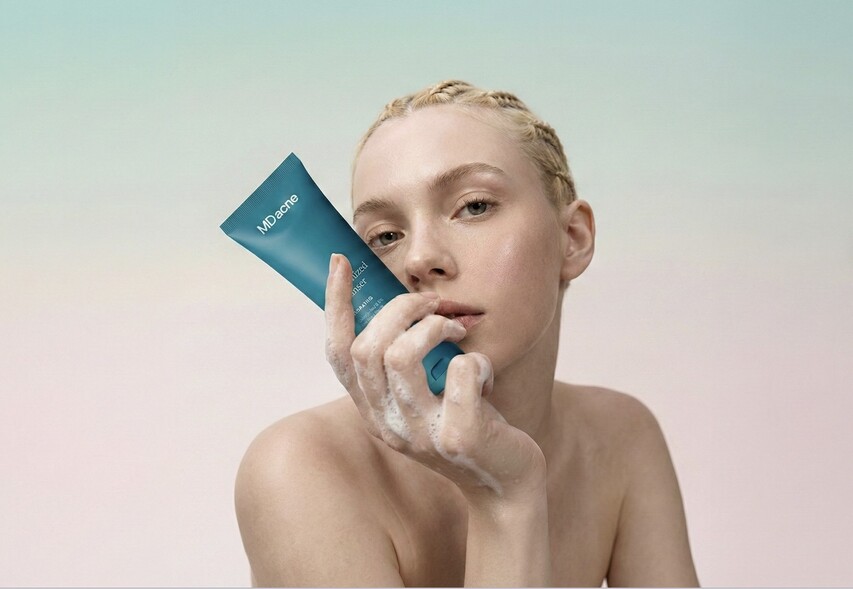
Why is the MDacne Hydrating Cleanser best choice for 2026?
The MDacne Hydrating Cleanser includes supportive ingredients that help acne-prone skin stay calm while you treat breakouts. Aloe and glycerin add hydration to reduce that tight, stripped feeling after washing. Green tea and vitamin E provide soothing antioxidant support that can help with visible redness and irritation. Licorice and vitamin C are helpful add-ons for uneven tone after breakouts, offering gentle brightening support as part of the overall formula.
What are the most common cleanser mistakes that worsen acne?
Common missteps include:
- Washing more than twice daily (especially with medicated cleansers)
- Using too much product
- Scrubbing with rough tools or brushes
- Combining multiple strong actives at once (irritation masquerading as acne)
- Quitting too fast before your skin adjusts
Consistency beats aggression. Your cleanser should feel like a supportive friend, not an interrogation lamp.
What’s the 30-second acne cleanser picker?
1) What’s your acne type?
- Clogged pores (blackheads/whiteheads): Salicylic acid cleanser 0.5–2%
- Inflamed pimples (red, tender): Gentle cleanser + BPO leave-on or BPO wash
- Sensitive/reactive acne: Non-medicated gentle cleanser first
2) What’s your skin feel after cleansing?
- Comfortable: keep going
- Tight/itchy/stinging: too harsh → switch to gentler, lower-active, lower frequency
3) Face vs body?
- Face: start lower (0.5% SA; lower-strength BPO)
- Body: often tolerates higher (2% SA; 5–10% BPO)
Shop:
MDacne hydrating medicated cleanser (Amazon)
More info:
- The ultimate guide to the best face washes for acne
- What does salicylic acid do for acne?
- The most common mistakes using acne cleansers
- Benzoyl peroxide vs. salicylic acid vs. adapalene
FAQ:
How often should I wash my face if I have acne?
Most people do best with twice daily. Over-washing can increase irritation and worsen breakouts.
How long until I see results from an acne cleanser?
Typically 2–6 weeks for noticeable improvement, depending on acne type and whether you’re also using leave-on treatments. Cleansers help, but they’re rarely the only step.
Is a 2% salicylic acid cleanser always better than 0.5%?
Not always. Higher strengths can irritate, and irritation can sabotage consistency. Many people do better starting at 0.5% and only increasing if needed.
Can a cleanser unclog pores on its own?
It can help, especially with salicylic acid, but pore-clearing is usually stronger with leave-on treatments used consistently.
Should I use a benzoyl peroxide wash or leave-on benzoyl peroxide?
Leave-on is often more reliably effective, but washes can help—especially for body acne or if you’re sensitive to leave-on irritation. Short-contact approaches have evidence.
What if my skin stings when I wash?
That’s a barrier warning. Switch to a gentler cleanser, reduce actives, moisturize, and reintroduce treatments slowly.
Do I need to double cleanse if I wear sunscreen?
Not always. A well-formulated cleanser can remove sunscreen effectively. If you double cleanse, minimize friction and avoid fragranced oils if you’re acne-prone.
Can cleanser choice help with post-acne dark spots?
Indirectly, yes: less irritation means less inflammation, which can reduce the risk of lingering marks. For fading, sunscreen + leave-on brighteners matter most.
What are relevant PubMed-style references for acne cleansing and key ingredients?
- Zaenglein AL, Thiboutot DM. Guidelines of care for the management of acne vulgaris. J Am Acad Dermatol. 2024.
- Boonchaya P, Rojhirunsakool S. Minimum contact time of benzoyl peroxide for a bactericidal effect against Cutibacterium acnes. Clin Cosmet Investig Dermatol. 2022;15:403-409.
- Leyden JJ, McGinley KJ. In vitro kill rate study against Propionibacterium acnes comparing benzoyl peroxide cleansers. J Am Acad Dermatol. 2003.
- Kircik LH, Draelos ZD. Double-blind placebo-controlled evaluation of a 0.5% salicylic acid acne regimen. J Am Acad Dermatol. 2011.
- Arens-Corell M, Korting HC. Regular use of soap vs acidic syndet bar in acne-prone patients: randomized comparative trial. Dermatology. 1995.
- Korting HC, Braun-Falco O. The significance of skin surface pH and cleansing for barrier function. Int J Cosmet Sci. 1996.
- Kwon HH, Yoon JY. Clinical and biological effects of topical green tea polyphenols in acne. J Invest Dermatol. 2013.
- Thiboutot DM, Gollnick HP. New insights into the pathogenesis of acne: inflammation and sebum regulation. Dermatology. 2009.
- Dreno B, Tan J. The role of Cutibacterium acnes and antimicrobial strategies in acne. J Eur Acad Dermatol Venereol. 2018.
- Del Rosso JQ, Zeichner JA. Topical therapy considerations in acne: efficacy, tolerability, and adherence. J Clin Aesthet Dermatol. 2016.
To find the right acne treatments for your unique skin, take the free skin quiz by clicking here.
Enjoyed this article? Add MDacne as a preferred source on Google.